
October 8, 2024
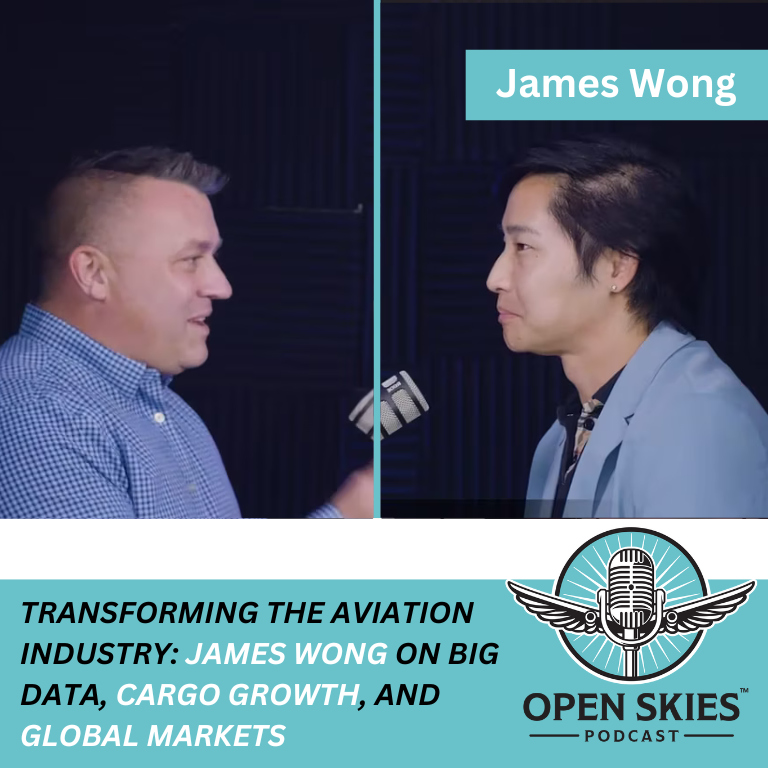
In this episode of the Jump Seat, host Chris Glass sits down with James Wong, Senior Vice President at Menzies,...
In this episode of the Jump Seat, host Chris Glass sits down with James Wong, Senior Vice President at Menzies,...
In this episode of the Jump Seat, host Chris Glass sits down with James Wong, Senior Vice President at Menzies, to discuss his fascinating career in aviation. From his early days in the Royal Canadian Air Cadets to pivotal roles at WestJet and his current position leading Menzies’ operations in Southeast Asia, James shares valuable insights into the industry. They explore the evolution of big data in aviation, the challenges of managing global operations, and the growing opportunities in the Southeast Asian market, particularly in cargo. Tune in for a deep dive into the future of aviation and the lessons James has learned from his diverse experiences around the world.
Chris Glass: 00:00
Over the past two years, I’ve been the host of Flight’s Jump Seat and I’ve had the time of my life telling all of the best aviation stories we could find. We’ve talked to CEOs, we’ve talked to pilots and we’ve talked to people in the aviation industry about this dynamic industry that we all love. But now it’s time for something new. I’m going to be moving on to a brand new podcast that we’re very excited to bring you, called the Open Skies Podcast. We’re still going to continue our mission to tell the best stories that we could find in aviation and the airline industry, so please join us anywhere. You can find your pods on the Open Skies Podcast or you can follow us on LinkedIn and Instagram. I’ll see you on the new channel. Ladies and gentlemen, welcome to another episode of the Jump Seat. I am here with James Wong, Senior Vice President, with Menzies Correct. Welcome to the pod, James.
James Wong: 00:48
Thank you, thanks for having me Full disclosure.
Chris Glass: 00:50
I’ve known you for a very long time and you know we go back a long time ago from our WestJet days, so it’s not like this is the first time I’ve met you, correct? So let’s talk a little bit about your aviation history. So where did it all begin for you?
James Wong: 01:07
Where it all began.
Chris Glass: 01:08
Because you’ve had a fascinating career in many different ways.
James Wong: 01:12
I think it started when I was 14. My parents actually forced me into air cadets, into the Royal Canadian Air Cadets. So that was the spark. That was the spark for the rest of my life.
Chris Glass: 01:20
Okay, and what did that lead to?
James Wong: 01:23
What that that lead to. So I mean through the AirCamp program I became a pilot and that kind of blended into schooling for post-sec, into SAIT where I did my avionics, and then from avionics into flight simulation, which is where I joined WestJet and met yourself, and from there into the corporate side of airlines. I furthered education into you know some degree programs and whatnot and moving up the airline world, starting some business on the side just my entrepreneurial hobbies and eventually leading to Menzies and my current role, now based out of Singapore.
Chris Glass: 01:57
So you’re a long way from home, but Calgary is always kind of home-based for you.
James Wong: 02:00
Calgary will always be home.
Chris Glass: 02:02
Right, so let’s talk about your SimTech days, because that’s where we first met, yeah, and that gave you a certain experience. So what was that like?
James Wong: 02:09
That was six or seven years of my career, I suppose, at WestJet and pivotal, pivotal career growth anyways. That’s where I learned really the WestJet way or back in the day when WestJet had good Kool-Aid and I learned a lot about leadership and management and grew up there really understanding the civilian side of the business and learning about airlines and whatnot. So it was good Finished off as a lead hand there, but yeah, it was fantastic.
Chris Glass: 02:37
Now, and so the SimTech world, but then you transitioned to another part of the company. So let’s that’s where we really got to know each other other than, uh, just the, uh, the sim world, uh, where we actually worked directly together and, in fact, you were my boss at one point. So let’s talk about the ops performance team, the legendary performance.
James Wong: 02:57
that was, uh, uh, an interesting team actually. I really enjoyed it. Uh, allowed me to flex some new skills as it related to business analytics and operational analytics, so really giving a bird’s eye view of the entire company, both from an operational standpoint and from a corporate admin side of things. So that was a really good experience and really seeing how all the puzzle pieces fit together that actually ran an airline and how it related to efficiencies and operations so extremely useful in that span.
Chris Glass: 03:28
Did you feel back then because I have my opinions, but do you feel like we had the data that needed to make the decisions we were making, or do you think there was a gap?
James Wong: 03:34
I think the world was young, so it wasn’t just WestJet or the IT investments that were involved and whatnot, but I mean big data was still relatively young at a global level, and unless you were the Amazons or the Microsofts or the Googles that specialize in IT all this other industry is falling behind and a lot of companies like WestJets, as a personal opinion, would underinvest in that part of the world and try to fill those gaps with people.
James Wong: 04:02
And I think in this day and age, if you were to compare the technologies and the cost of technology today compared to what it was when we were there 10 years ago, there would be a big difference.
Chris Glass: 04:12
Right, especially with the elasticity of some of the cloud-based computing, that goes on. You kind of pay as you go and it’s cheaper on the lower end and elastic. Do you see the same gaps now? Or do you see airlines making the same mistakes or maybe not evolving quickly? Or do you see some airlines well ahead of the curve?
James Wong: 04:36
I think the gap still exists, but it’s different. Okay, the concept of big data and data lakes haven’t been around for that long, you know, like they’ve come in tranches in terms of like five or ten years, five or ten years and even with the onset of AI. Now, now everyone’s trying to scramble and adapt to even a newer technology, whereas they may not have even established the infrastructure for the older technology.
Chris Glass: 04:56
Right.
James Wong: 04:56
So we’re constantly learning and trying to take advantage of new technologies, and companies are trying to constantly stay at the forefront of what they can afford, right. So because of that, it creates gaps all the way through. So while they’re still learning and still trying to build a foundation, they’re also trying to drive forward, right.
Chris Glass: 05:13
Right.
James Wong: 05:13
So I think that even the advent of AI, everybody wants to take advantage of it.
Chris Glass: 05:17
Nobody really knows how. It’s kind of the buzzword right now. Yeah, exactly, and in some companies it’s just a chatbot working really well, and in other companies it’s major decision-making.
James Wong: 05:28
Absolutely, absolutely. And then it’s so department-driven as well, right? So, although a company might have a really grand IT map and dream, really, it’s department-driven by the individual managers, and sometimes they just go all over the place.
Chris Glass: 05:39
So after that you had two kind of forks in the road. You left your Westhead career, and where did you go from there?
James Wong: 05:51
Yeah, I went to a company called Clear Grid.
Chris Glass: 05:53
Right.
James Wong: 05:53
And Clear Grid is based out of Springbank here in Calgary with a really good friend of mine and she continues to operate the business and basically it’s an aerial data collection company flying small aircraft around all of Canada. An aerial data collection company flying small aircraft around all of Canada.
Chris Glass: 06:06
So I think you’re underselling it a bit, because I think ClearGrid is a very cool.
James Wong: 06:19
This is not a paid advertisement for ClearGrid, but meter readers used to go house to house to house to house to check if it was accurate, correct. Yeah, we introduced some amazing tech to check if it was accurate, correct. Yeah, we introduced some amazing tech. So most meters electricity or water meters and whatnot back in the day it used to be a person that walked up to your house and would collect the data physically and visually by looking at the meter. A few decades later it turned into wireless. People would drive around with trucks and even to this day that seems to be the more predominant way of collecting meter readings.
Chris Glass: 06:42
They drive around with a truck and it’s wireless.
James Wong: 06:45
Just hitting each. Yeah, exactly, they’ll drive down the street and they’ll just collect everything wireless off the signal. And what we’ve done is really developed a technology in that company to have even greater sensitivity and fidelity, and we can capture the same signal except from a few thousand feet away, so far enough that it’s about 5,000, 6,000 feet, and so we threw the technology into an aircraft instead, and because of that the sweep is significantly greater. So what would normally take 100 drivers in 30 days in a cycle to capture all of Calgary, we can do in two days in one aircraft.
Chris Glass: 07:16
That’s crazy.
James Wong: 07:17
Yeah, so we save a ton of carbon footprint, a ton of labor, a ton of cost for the utility companies. We’re able to sell that data back to the billing cycles.
Chris Glass: 07:25
Now a ton of costs for the utility companies. We’re able to sell that data back to the billing cycles. Now, how many cities is ClearGrid operating in now?
James Wong: 07:29
In Canada. Yeah, Right now we cover all of Alberta, both rural and urban, which is fantastic, and then expanding into Ontario, as well as some work south of the border in the US as well.
Chris Glass: 07:40
Wow, okay. Are there many competitors in the space, or are you really the primary disruptor?
James Wong: 07:46
We are the sole service provider, sole service provider, that’s a good place to be.
Chris Glass: 07:54
Yeah, absolutely, excellent. Okay, so that was one fork in the road. What was the second fork? Because you went from ClearGrid and then you ended up where.
James Wong: 08:01
Yeah, that’s when I ended up at Menzies Right. So in ClearGrid I took care of flight ops and the operations that ran that business and then Menzies asked me to go out to Vancouver. I helped them out with the business out there for air cargo.
Chris Glass: 08:13
And that was a small, smaller operation at the time.
James Wong: 08:16
Smaller operations, only about 130, 150 employees, given at the time it was 2018, I think it was and basically we were just running a few, you know, budgetary problems and some cultural issues. So just looking for a manager to kind of flip that business around, move it back into success, drive some operational efficiencies and move on from there.
Chris Glass: 08:35
And you probably expected to spend a long time in Vancouver.
James Wong: 08:38
Yeah, I had planned on living there for quite some time. I was only there for six months, six months, six months. It was an interesting adventure in those six months, though.
Chris Glass: 08:46
Excellent. So what did you learn from your six months in Vancouver? What was the big takeaways?
James Wong: 08:51
You know, I think Menzies was the first true multinational corporation I’ve ever worked for Really, and so that was a lot of exposure in understanding how a real MNC operates from a business perspective and how it integrates on a global level and with a company that’s spread right around the world. So that was really really neat, as well as exposure to multiple international airlines and the different operating procedures and SOPs that they had. That was something very unfamiliar for me because I was so focused on WestJet.
Chris Glass: 09:21
You grew up in the world.
James Wong: 09:22
Yeah, exactly, and to see the diversity and the different ways that people do things was quite an eye opener and that was extremely helpful and really helped broaden my base as well as to meet a ton of people from the global industry, so that helped a lot in that experience.
Chris Glass: 09:37
Right, yeah. And then from Vancouver you ended up moving to.
James Wong: 09:41
Toronto. Yes, so we moved from the GM of Vancouver over to a sales position, commercial, into Toronto to run Menzies Canada, and that was right before COVID. So that was a really good experience as well. So I kind of started moving my career more as a corporate and now to the commercial side, so kind of taking care of the operations, looked at HR when it came to organizational development and redesign for org structures, looked at HR when it came to organizational development and redesign for org structures, and then now I’m moving into the commercial world and that was really really neat, really understanding how the revenue side of the business plays with the cost side of the business and how to integrate that, and that was a really good learning experience as well.
Chris Glass: 10:18
And then COVID. Yeah, covid was fantastic, which is pretty much everybody’s story when it comes to it. We recorded an earlier podcast where COVID came up as well. How did that affect Menzies in Toronto? For you personally, and I know, 90% of the industry was relatively shut down at that point, but how did that affect you? How did it affect your role?
James Wong: 10:40
COVID was a sad time. Most people would say challenging, but on a personal level it was a sad time. Most people would say challenging, but on a personal level it was extremely sad. You know we went. We probably reduced our labor workforce close to 80, 85% in that span of six months. And to have that personal touch point with laying off people and giving them bad news was on a personal level, very, very tough. But it was also great motivation to drive the business forward in terms of growth, to get those jobs back.
James Wong: 11:08
Yeah, and we were really lucky in some ways. I mean, our head office in Toronto went from about 50 employees down to six, and the six of us managed to grow the business geographically during COVID and we were able to grow it. We really tripled the footprint across Canada, from four stations to 12 and then later on to 16. And so, although we weren’t able to retain jobs in existing stations because we had to reduce the size, we were able to establish new opportunities in new places, right. So at least it was kind of a. I mean, on paper it looked great because we were growing. On a personal level, it was still tough because it was still impacting individuals, right. So that was a really interesting way to play the game. When we called it a day, I really reflected on what we were doing. We were using the excuse of hey, the company is still alive, we’re still thriving, we’re still growing. But it was definitely tough on a personal level, talking to individual people.
Chris Glass: 12:02
So when you went down to six people, part of that had to do with the border closure and nobody being able to come over and help and help support you guys. So how did that go? Did you feel like you were on your own island?
James Wong: 12:18
A lot of people say that really we are a small business. Menzies is a small business. Yeah, we’re 50,000 people across the globe, but the reality is that the people that actually run the business is very, very small. Right, you know, head offices might only be anywhere between 10 to 20 people, even though there’s, you know, thousands of frontliners.
Chris Glass: 12:37
Right.
James Wong: 12:37
That are actually doing the work, and a lot of that was really emphasized during COVID. You know we were down to a team of six. We still had thousands of employees that were still with us, that were still retained Right and between six of us. In a small business, like any small business, you tend to do whatever needs to be done, right? So, even though a person might be specialized in HR or one specialized in ops, roll up the sleeves. Yeah, exactly, if a room needed to be painted, then Exactly. If a room needed to be painted, then you would paint the room Whatever it took, throwing bags on the front line when we had to, driving the accounts and doing AP and AR when we had to, whatever it took. And so it was actually, in some ways, a blessing in disguise, because you got to touch every single part of the business as a result of that.
Chris Glass: 13:21
And one of the big trends during that whole COVID time was the outsourcing of jobs by airlines. So, airlines would stop using their own employees. How did that affect Menti’s?
James Wong: 13:34
I mean that’s a good news story for the ground handling industry. What’s interesting about it, though, is that when these airlines decide to change their strategy across and outsource the work, they would change the way that they did business operationally.
Chris Glass: 13:48
Yeah.
James Wong: 13:48
And that’s something that a lot of airlines are not willing to give up in some ways. Yeah, but further to that too in their strategies for outsourcing, is that they would divide out decision-making capability so they’d have their ops teams driving efficiencies, driving the SOPs and then they would separate the financial side. The separate team usually bundles the procurements and those teams don’t talk, and they never have no, and they all operate on different KPIs. One wants to get the best deal and one wants to give the best service, and everything comes at a cost, right, and so for ground handlers in our field, usually we tout ourselves as being experts in the industry, experts in those specific processes to turn aircraft.
Chris Glass: 14:27
Right.
James Wong: 14:28
And so the tighter the cuffs that a customer puts on us, the harder it is to do our job, the higher the cost rate. Yeah, and so a lot of it is cross-communicating, educating the carriers in terms of what do they actually want?
Chris Glass: 14:40
Right.
James Wong: 14:41
And what are they willing to pay for? Right, and that’s an interesting dynamic that a lot of these airlines didn’t have. Right, because they had a lot of control over their main hubs, which is their primary point of contact their passengers, but yet in the smaller hubs, or even the smaller airports that they fly to, it’s not as important to them, and so having them lose some of that control is very nerve wracking for them, right, right?
Chris Glass: 15:03
Do you think that process is finished now? I know you’re not in canada anymore, but do you do you think that’s still in flux or do you think that it’s kind of settled now?
James Wong: 15:13
you know, I’m not really sure about the canadian landscape, but I know that this wasn’t just a canadian phenomenon.
James Wong: 15:18
This happened in australia, happened in the us um, and even now, with a lot of the startup airlines that are happening, um, in the southeast asia and china, they’re starting to recognize that at the get-go, at the start, right, and a lot of it is saying what is it that you actually want to accomplish with your passengers? You know, how do you want to measure what you consider to be success, whether that’s an NPS score, you know, or D0 timing or whatever the case may be Surviving Correct.
Chris Glass: 15:42
Provide the service.
James Wong: 15:43
Yeah, or if they have a margin to hit right. What is that measurement and how much do they actually want to get involved with the process?
Chris Glass: 15:49
Right.
James Wong: 15:49
Right and how much do they want to trust with us. So I think they’re a lot more open nowadays than they were back in the day, and even Qantas, if you look at them, like they’re trying to potentially bring it all back in, and they were actually the first ones to set the bar and send everything outwards right. So it’ll be interesting to see what happens in the next year or two, whether it’s worth doing. Yeah, exactly.
Chris Glass: 16:13
Okay so now you’re starting to talk about the Asian marketplace. How did you end up? Toronto to Singapore?
James Wong: 16:18
You know what? Southeast Asia is one of the largest growing economies, especially even in terms of the rate of growth. Cagrs over the last five years has been upwards of 8% to 10%, which is massive. And then, when we look at China, they’re talking about a pullback in terms of economic growth, showing figures of 4% to 6%. There are massive regions of the world that would die to have a 4% to 6% growth rate just because they came down from the 20s, go figure.
James Wong: 16:45
So MEDSYS was extremely underrepresented in that part of the world and so there was a large opportunity to be had and not in a focus for our company at the time. So it was a good opportunity to head out there and kind of start leading the growth and the presence of Menzies in Southeast Asia.
Chris Glass: 17:00
So what’s that like now?
James Wong: 17:02
What’s that like now you?
Chris Glass: 17:03
took the big risk, moved out there, yeah. And now how’s it going? What’s the market like? It’s going well.
James Wong: 17:10
It’s still a big market and we’re still very small. When I got out there and we established this new region for Menzies, we only had two operations, one in Macau and one in Jakarta. That was it and a really small employee count, just about 1,100 employees. And that was two years ago, two and a half years ago now, and now we’re currently sitting at about, I’d say, four to five operations, one of them’s kind of quasi, and you know, upwards of 4,000 employees. You know, triple the P&L that we had two years ago. So it’s a really, so far, it’s a good success story, but it’s a very different way of doing business out there as it is, compared to North America or even Europe.
Chris Glass: 17:49
So give me a little bit about that. What’s the differences?
James Wong: 17:53
Yeah, you know it’s interesting. I’ve been studying this for some of my schooling that I’m still doing and I’m really into business development now. So it’s all about mergers and acquisitions and greenfield growth and it takes a lot more patience to do business out there compared to the, I guess the more Western corporate style of doing business over here. You know, everything here is actually a lot more numbers driven and very factual in a lot of ways. So it’s actually quite easy to counter, argue and negotiate and whatnot. 007.
Chris Glass: 18:23
Yeah, numbers are numbers 008.
James Wong: 18:24
Yeah, numbers are numbers, and I find that in Eastern corporate culture there’s a lot about relationships and a lot about networking, and sometimes it takes years to build on those relationships Right, and that’s really the key, and I think some of it exists in Western corporate culture, but it’s not as forefront. You know, here you can sit down with the procurement team that you’ve never met before and hash out a deal in three, four months Right. But over there you hash out deals over years Right, and really the payback is on the back end. It takes a long time for it to realize. So the question is whether or not companies are willing to invest for that length of time and not see any results just yet. Yeah, and it’s difficult when you’re dealing with public companies, you know, because they have the quarterly reports they have to do, they have their annual reports that they have to do, right, so they need to show something to the shareholders to prove that investments are going to pay off and get an ROI. But you don’t really get that when you’re investing in relationships.
Chris Glass: 19:17
Right. So it’s not speed dating, it’s long-term relationships. Yeah, what’s?
James Wong: 19:26
Menzies market share right now in Southeast Asia. Oh, we’re small. I mean, the largest player right now in Southeast Asia is Sats, who recently acquired WFS. I’d probably say we’re tiny, tiny. Even from a percentage standpoint, I’d say we’re less than 5% on the market.
Chris Glass: 19:42
So this gives you an incredible opportunity to start stealing some market share.
James Wong: 19:47
Or growing new ones. Yes, Growing new ones.
Chris Glass: 19:49
Okay, where’s the opportunities? Where’s the growth?
James Wong: 19:51
You know what, china is always going to be the massive driver. You know, swissport tried it decades ago and they ended up in a reverse buyout and they failed. And I think that that was kind, of, you know, going back to this whole concept of the Eastern corporate versus Western corporate style. That’s kind of what happened, right. And I think this time around there’s a strong possibility that we can, you know, kind of bridge that gap, yeah, and try to explore and grow into China. And we just recently established operations again in Hong Kong, which is, you know, a massive airport for us at a global level, and using that leverage and the momentum that we have from our reputation now to kind of drive even further inland into China. So I think there’s a lot of opportunities there. The government’s shifting, it’s a little bit more stable if you think of it independently from North America, and they’re really starting to deregulate and modernize their aviation systems.
Chris Glass: 20:42
Excellent.
James Wong: 20:42
So that’s good. Yeah, there’s so much growth happening in china when it comes to aviation absolutely like there’s new airlines popping up everywhere, and there’s new aircraft. New aircraft yeah the comac.
Chris Glass: 20:54
Uh, we’re on a few of those planes. Um, it’s just an amazing growth sector. Uh, what’s it like doing business in china versus the rest? Is there a difference with China versus the rest of Southeast Asia or and I’m not talking like Australia, new Zealand, that kind of like the?
James Wong: 21:13
Probably like the Malaysia, the Thailand, the Singapore yeah, it’s. They’re still very traditional in a lot of ways, and you know where the rest of the world is trying to get away from business cards, for example, just as a sign of sustainability, in China, that ritual of exchanging business cards with a bow and a handshake will always be there.
Chris Glass: 21:31
Right.
James Wong: 21:32
You know. Similarly, when we sit in boardroom meetings, they’re very formal and whatnot, and I think that that’s going to carry on, at least for the next few more decades. Right, you know that culture, those rituals, will continue to always exist, right, whereas the Southeast Asian or the Asian, tends to be a lot more adaptive and more westernized than China ever will be right. So just recognizing that the cultural differences and being sensitive, you know, to every single country that you go into is extremely important.
Chris Glass: 21:59
So it sounds like there’s a lot of pre-work that goes into that.
James Wong: 22:02
Absolutely. Tons of cultural study, right Trying to figure out exactly how to connect Correct. Even something as simple as trying to present a thank you gift is very sensitive, both in terms of sitting on the fence between bribery and corruption and saying that this is actually a genuine appreciation, business to business kind of thing, versus I don’t know what a good comparison is.
James Wong: 22:29
It’s kind of like birthdays in a lot of ways between between Eastern and Western cultures. You know, in the Western culture when you get a birthday gift it’s important that you act really excited and you open it right away and you play with it and you appreciate it right away. In the Eastern side of the world, when you receive that gift you often put it off to the side and that delay of gratification is just a sign of respect to the person that’s actually giving it.
Chris Glass: 22:52
And somebody from a Western culture could be like they do not like the gift, Exactly, yeah so it’s really understanding those little nuances and they feed right into business and negotiations and whatnot. Have you found that a challenge growing up here in Canada, transitioning to that market, to understand those differences and to, I guess, be respectful of the cultural differences?
James Wong: 23:13
Yeah, I think I’m pretty lucky because I’m a first-generation Canadian, generation Canadian, so I still had a lot of my experiences on both sides of the cultural barrier. So it was really, really good. It helped a lot that I’m Western educated but I’m able to appreciate some of those cultural sensitivities. It’s not to say I’m an expert. When I got there it was still a culture shock for me and I’m still learning day by day, week by week, when I’m going to those countries and interacting with those people.
Chris Glass: 23:39
So, yeah, so million-dollar question then what are airlines not doing that they should be doing now? Based on your experience, you’ve seen both sides of it. You’ve seen the operating of an airline, you’ve seen being a partner of the airline. Right, where’s that sweet spot between outsourcing, keeping things in-house, deferring to the experts, versus becoming an expert yourself when it comes to ground ops and that kind of stuff, like what is the trends that you’re seeing that you think airlines can improve upon?
James Wong: 24:12
You know, that’s an interesting question because it, I guess, is really specific to what sector of an airline. You know. Whether you’re talking about passenger airlines, talking about cargo airlines, you’re talking about guys that just specialize in ACMI charters Right, and there’s room for all of them and there’s room for a lot of different business models and ultimately it really depends on where they want to put themselves in that model. Right, Are they a low-cost carrier? Are they a true ULCC? Right, Are they somewhere in the middle? Yeah, are they hybrid? Are they full-service carrier? And really being able to identify where they are and having deep enough pockets to drive that business until it becomes profitable.
Chris Glass: 24:47
Right.
James Wong: 24:48
You know, in the last two years I’ve seen multiple airlines spark up and fail, you know, within a span of a year. And again I’ve also seen some airlines that have sparked up and have been able to just barely sustain, you know, like they’re now operationally break-even in the grand scheme of things, but they’re still losing money.
Chris Glass: 25:03
Right.
James Wong: 25:03
And I think a lot of them lack identity and there’s not enough airline expertise driving the growth of a lot of these carriers. You know, a lot of them are startups from people that still think of aviation as being very, very sexy. You know, I get to buy an airplane. Oh, I own an airline. It’s fantastic.
Chris Glass: 25:20
And it is until you have to pay the bill. Yeah, it’s only going to cost me $10 million, and then, all of a sudden, they’re in for $100 million and they don’t realize.
James Wong: 25:25
you know I’m still losing money it doesn’t make sense, you know, and they hire the wrong people in place. It’s still very, very small, right, and I think that the ability to adapt across the border and globally is great, but the reality is that every region, every country is still unique.
Chris Glass: 25:41
Yeah.
James Wong: 25:41
You know, and we even see that in Canada, when you start importing talent from either south of the border or across the pond to try to run carriers here, it’s that they all have successes in their homes, where they grew up, you know, very familiar with the market, with the economics. And then trying to apply the same you know cookie stamp into a different part of the world is very, very tough.
Chris Glass: 26:06
Yeah, you know, you hit the nail on the head too when you’re talking about Canada as a very unique environment, right, people think you could take the ULCC model and go. Well, canada is one of the only developed countries that doesn’t have one like a real successful one. And I’m not discounting Flair, but I mean to be continued there. Right, they’re not at that stage of 50, 60 aircraft yet. And you know, you have these ideas that come in and think you know, hey, we’re going to revolutionize this space, and then you realize how far apart Canada is how high.
Chris Glass: 26:34
The taxation is how the airport rent situation is different from other operating environments, and then they’re just not successful. You know, do you? This is a question just off the top of my head. Do you feel ULCC in Canada can be successful based on your experience?
James Wong: 26:51
I’m not an expert in the airlines. If I was to start one here, I probably wouldn’t start at ULCC, great. But there’s no demand in Canada for flying relative to other countries and other places. When you look at, you know now that I’m more familiar with Indonesia and Malaysia and Singapore and Thailand, stuff like that, the sheer density of the population. Yeah, by consequence, there’s a demand for aviation.
Chris Glass: 27:14
Yeah, you don’t see Dreamliners on commuter routes here.
James Wong: 27:17
Yeah, exactly, you know those guys are flying A380s for an hour and a half legs Right and they’re full, and they’re full, yeah.
Chris Glass: 27:26
Yeah, it’s tough to get a quantity scale.
James Wong: 27:27
That’s crazy.
Chris Glass: 27:32
Okay. With that being said, where do you think, besides China, is the next growth sector in Southeast Asia? Like, do you see more ULCs coming up? Or do you see, like, what’s the trend?
James Wong: 27:45
Cargo. Cargo carriers are the way to go.
Chris Glass: 27:48
Still, absolutely, because that was the big buzz after COVID, everybody wanted to start a cargo airline. Is that still on fire down there?
James Wong: 27:56
You know it still is. It’s that the commodities have changed. Yeah, you know, the advent of e-commerce, shopping and whatnot that started or really took hold during COVID, continues to take hold now. Right, you know companies like Tmoo and TikTok and Taobao and Amazon those guys are continuing to drive demand. Yeah, the difference is that cargo warehouses were never designed for e-commerce. You know, they’re designed for big, dry goods.
James Wong: 28:19
They’re designed for fruits and vegetables, yeah exactly Designed for pallets, not small envelopes by the thousands. And that’s kind of where the demand is now. Everybody wants their goods. You know, within the hour or the same day. And when we look at Southeast Asia, everything’s an island. Everything, from the Philippines to Indonesia to Malaysia, everything’s islands.
Chris Glass: 28:38
Yeah, so you’re not driving it in a truck, yeah exactly.
James Wong: 28:40
And then just north of that is China, where 90% of these goods are being produced and continue to be produced regardless, right? So there’s a huge demand for narrow-body cargo, as much as there is for international cargo on wide bodies. I mean, just recently, air France, air France KLM or Martin Air, their cargo subsidiary, just shifted cargo capacity from South America down over to Southeast Asia and China Wow, and a massive movement of their widebody fleet across the board, because they need more space, they need more to meet the demand, essentially, right? Wow, it’s quite significant.
Chris Glass: 29:14
I never even thought about how island-specific Southeast Asia must be for cargo that does lend itself very well to air travel.
James Wong: 29:22
Yeah, absolutely. If you look at just Indonesia, it’s actually wider than Canada is in terms of east to west, in terms of their geography, and there’s over 200 islands, and so everything is driven by air, absolutely everything.
Chris Glass: 29:36
Well, it sounds like you still have a lot of work to do in Southeast.
James Wong: 29:41
Asia. I’ll be there for a while.
Chris Glass: 29:43
That’s good. Well, we’re about done for time today, but what I would like to ask everybody is I love to travel. You’ve seen the world. Where do I need to go next?
James Wong: 29:54
Where do you need to go next?
Chris Glass: 29:55
Besides Singapore to see you, you know what.
James Wong: 29:57
Singapore is a great place to base yourself out of. Look at it that way, you know it’s very similar to Europe. Once you’re there, traveling is like very, very cheap right. So definitely come to Singapore, base yourself out of there, spend a couple of weeks. Yep, you know, bali is a quick hour flight away. The Philippines are fantastic if you want to go to Cebu or Manila to actually check out the beaches and the big cities and whatnot. China is an amazing country to actually see with your own eyes and really get your own objective viewpoint of it. They’re decades ahead of us, decades ahead of North America really, when it comes to technology and economic growth, and Hong Kong has come back full bore from what it was 10 years ago. It’s a great city to be in now.
Chris Glass: 30:37
Well, and Hong Kong has come back full bore from what it was 10 years ago. It’s a great city to be in now. Well, I’m going to have to take you up on that Singapore offer. And thank you so much for coming into the office On your vacation, no less. So I do appreciate that. And thank you for spending some time with us on the Jump Seat today. We’re going to be back with some great new episodes coming up soon. Thank you so much.
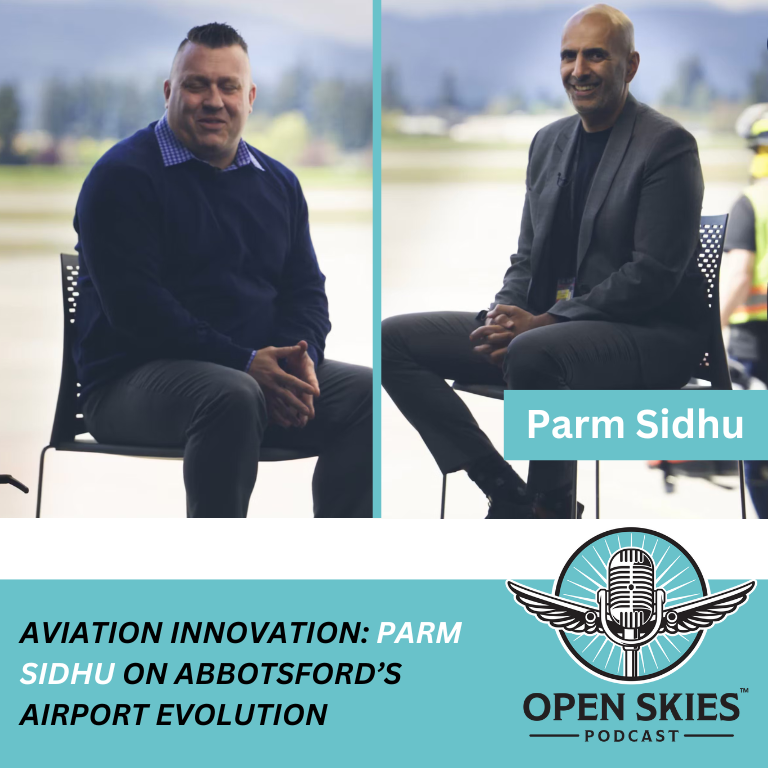
In this episode of Open Skies, host Chris Glass sits down with Parm Sidhu, the General Manager of Abbotsford Airport,...

Murray recognized when I had a lot on my mind one summer practice session and I wasn’t performing at my best. He observed that when the creativity or intensity of my efforts on the ice increased, my performance increased dramatically and helped me focus on, and only on, the task at hand. I still think of that when I find myself with a busy mind heading into a game or practice, I ask myself ‘what can I do in my warm-up that is creative or of high intensity to help me find focus and flow’? That still works for me every time.

I’ve had the pleasure of knowing Dr. Murray Heber for many years now, both as an athlete and as a practitioner & professional. Alongside the traditional needs to bring the best physical and mental self to perform and excel, Murray is also very knowledgeable about aligning these components together, where one has the chance to experience a Flow State where mind and body meet – that is when one has the opportunity for excellence. Murray brings this unique perspective to the achievement of High Performance.

Nash’s mental progressions and confidence have really allowed him to control the game and carry the puck with confidence and create offence opportunities. Working with Murray has exponentially improved his performance

In 2020 I was really worried about the compressed schedule of games and I was almost certain I would have to play injured when it counted the most. Luckily for me, I got to work with Murray and learned to move properly while still competing hard. When it came to the big day, the Stanley Cup Finals, I was able to play pain free and at my best.

Experience FlowPilot in person with Dr. Murray Heber